Historian Dr Rebecca Jinks has spent the past few years collecting the stories of Yezidi women captured by ISIS in Iraq, and sharing their stories alongside the similar experiences of female survivors of the Armenian Genocide in 1915.
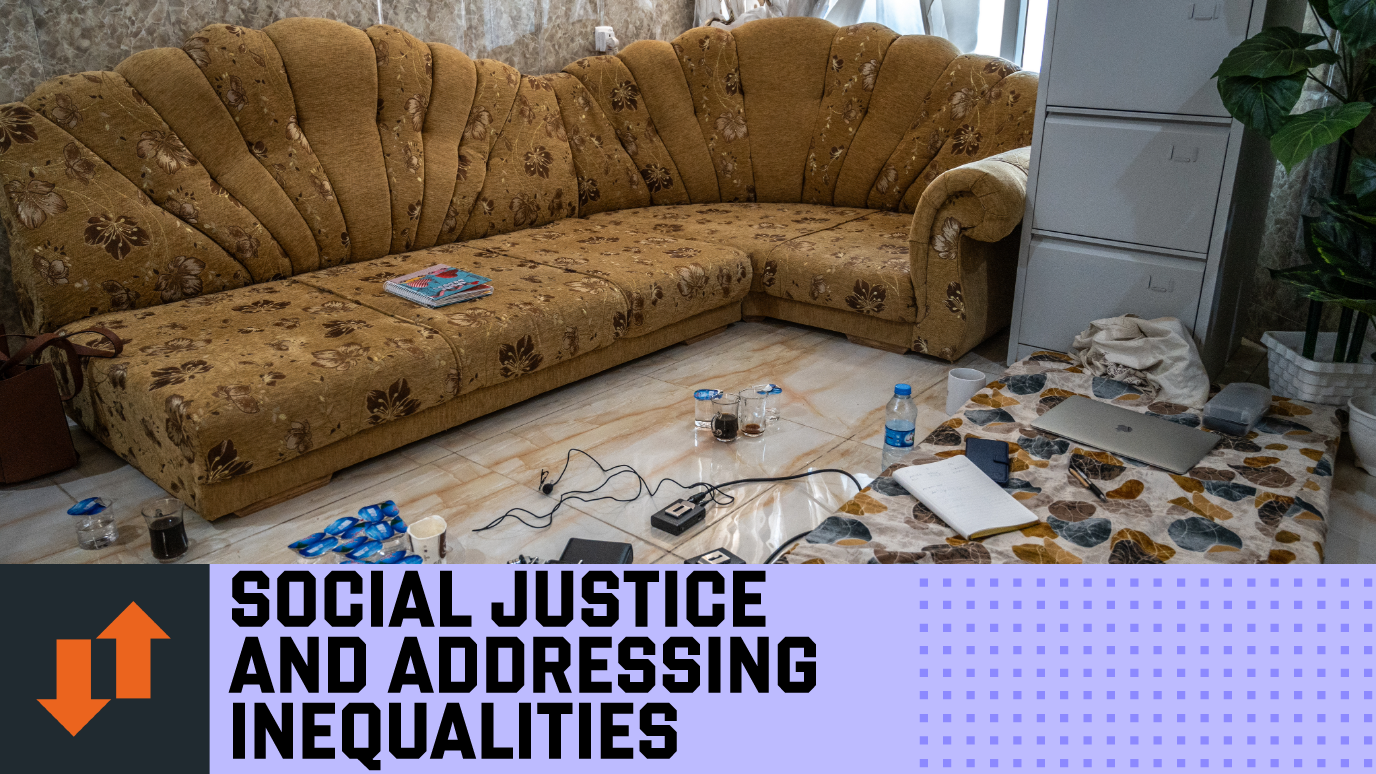
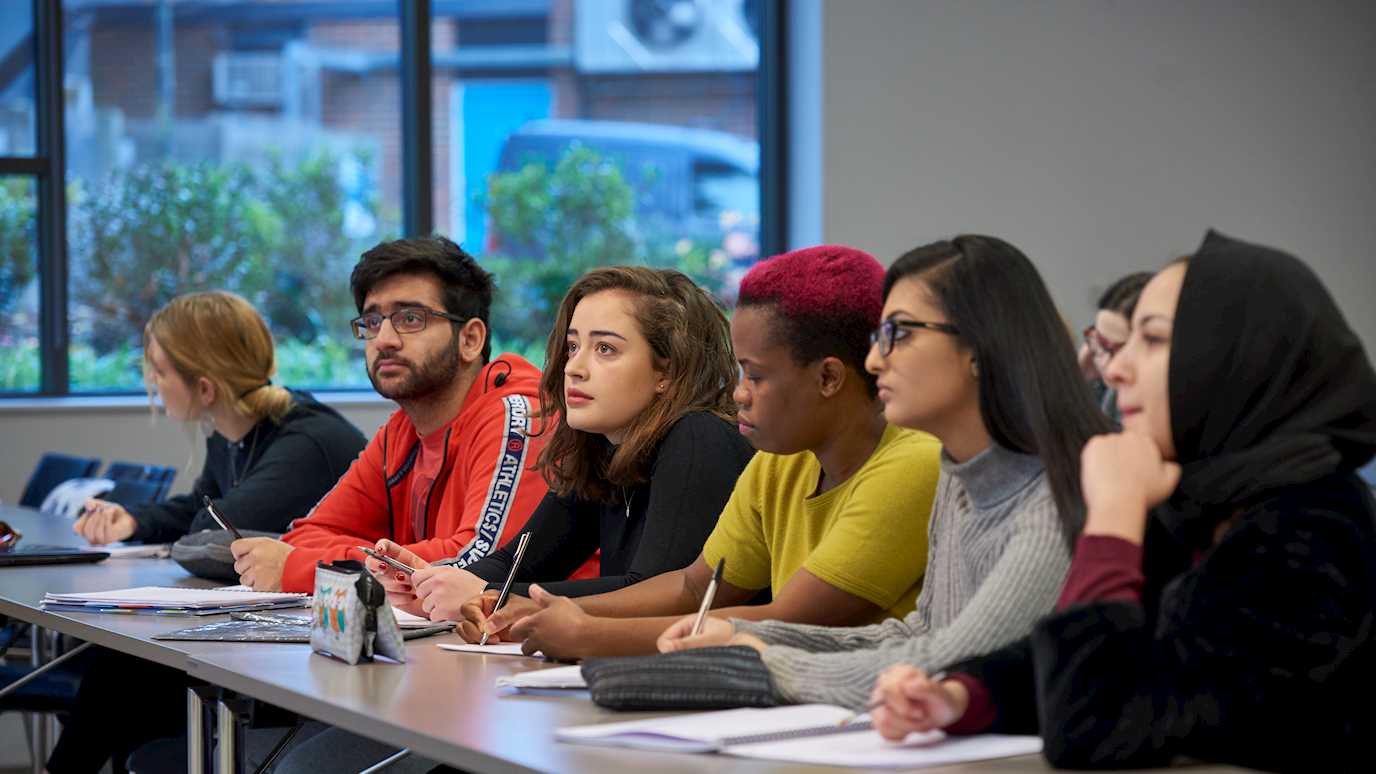
Photograph of the room used to interview surviours (copyright Claire Thomas, used with permission), with Social Justice and Adressing Inequalities banner underneath.
When historian Dr Rebecca Jinks first saw photos from journalists covering the kidnapping of Yezidi women from Iraq by ISIS in 2014, she was struck by a terrible familiarity. The photographs of Yezidi women, escaping the horrors of their capture, echoed photos she’d seen during her studies of the Armenian genocide of 1915. She knew, then, that she had to learn these women’s stories too. Now Rebecca’s work gathering images and testimonies of Yezidi survivors has become the basis behind acclaimed exhibitions, and will be the centrepiece of her upcoming book.
Rebecca visited Iraq in 2023, along with photographer Claire Thomas, to begin collecting testimonies first-hand as part of a project funded by the Arts and Humanities Research Council. As a historian, Rebecca has a different approach to conducting interviews compared to journalists or human rights lawyers. She looks at the whole context of these women’s lives, not just their time in captivity. It was important to her to consider the most ethical and empathic way to speak to them and tell their stories, particularly because of the extreme sexual violence many endured.
She wanted to consider both their personal experiences and some of the ethical issues surrounding similar testimonies of Armenian survivors gathered in the 1920s. “We don't know much about how they were collected. There was no notion of informed consent there,” she said. So, she worked closely with a translator to figure out what questions to ask, and decided to use a verbal recording of consent.
Many of these women have had to fill out a lot of paperwork in order to receive compensation and support from the Iraqi state after their capture, and Rebecca wanted to make it clear to them that these conversations had a different goal, as well as to make them more comfortable than a more sterile bureaucratic form might. She worked with the Free Yezidi Foundation, who provided a translator for her to work with, as well as psychological support to those who chose to speak with her. As a humanitarian relief organisation already known to the community, it made the process of finding people to speak with easier.
The fifteen testimonies she gathered have been preserved at the Wiener Holocaust Library in London, where they became the centrepiece of an exhibition held in 2024, Genocidal Captivity: Retelling the Stories of Armenian and Yezidi Women. The exhibition drew a surprisingly diverse crowd, with over 1,000 visitors to the main space, and tens of thousands of social media impressions.
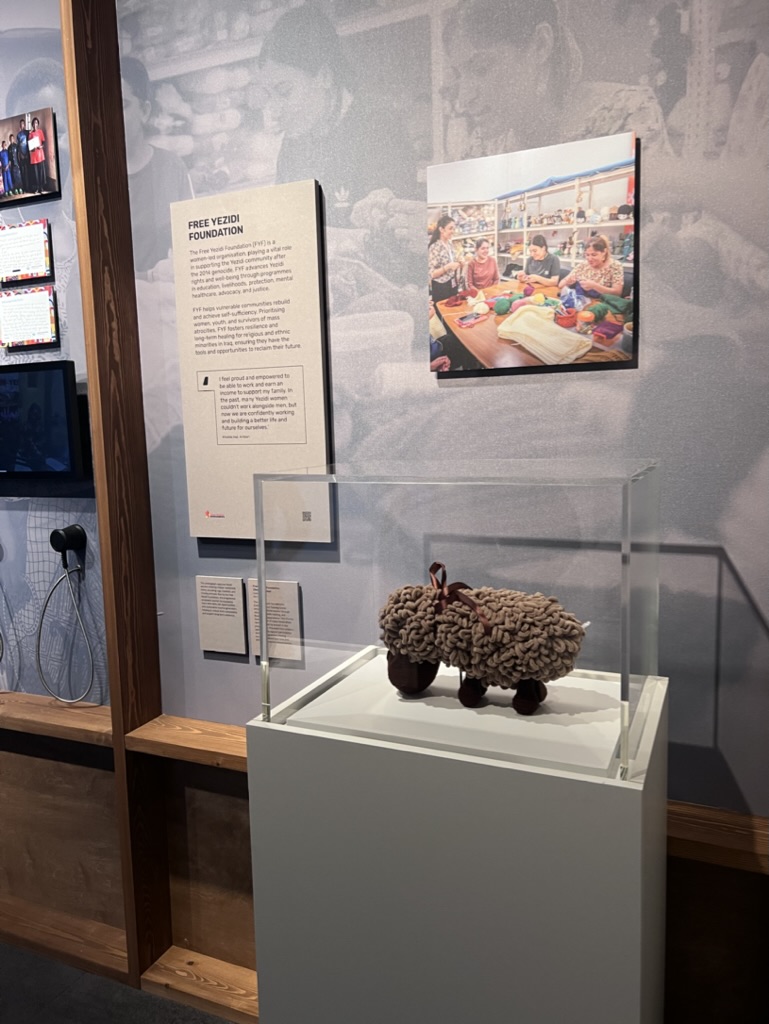
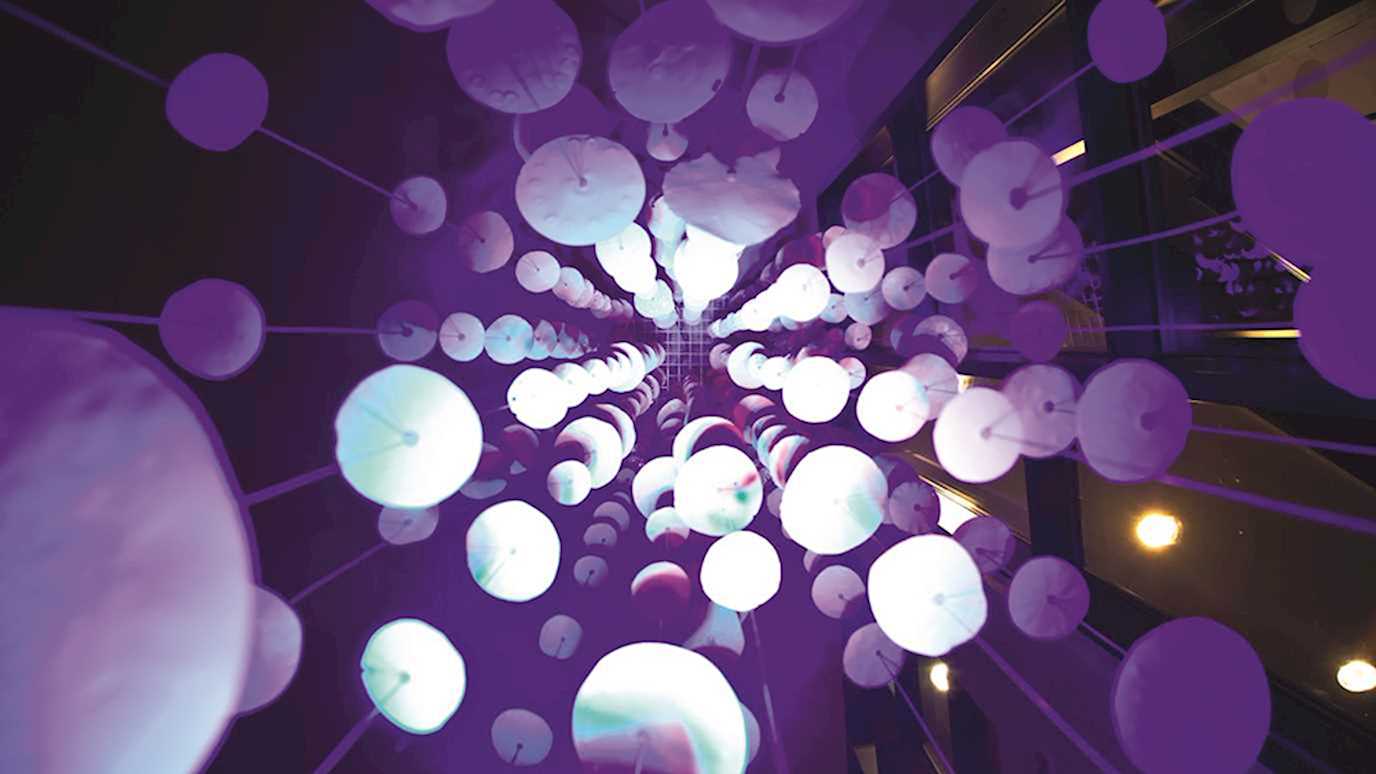
Photograph of one of the exhibits at the Weiner Holocaust Musuem.
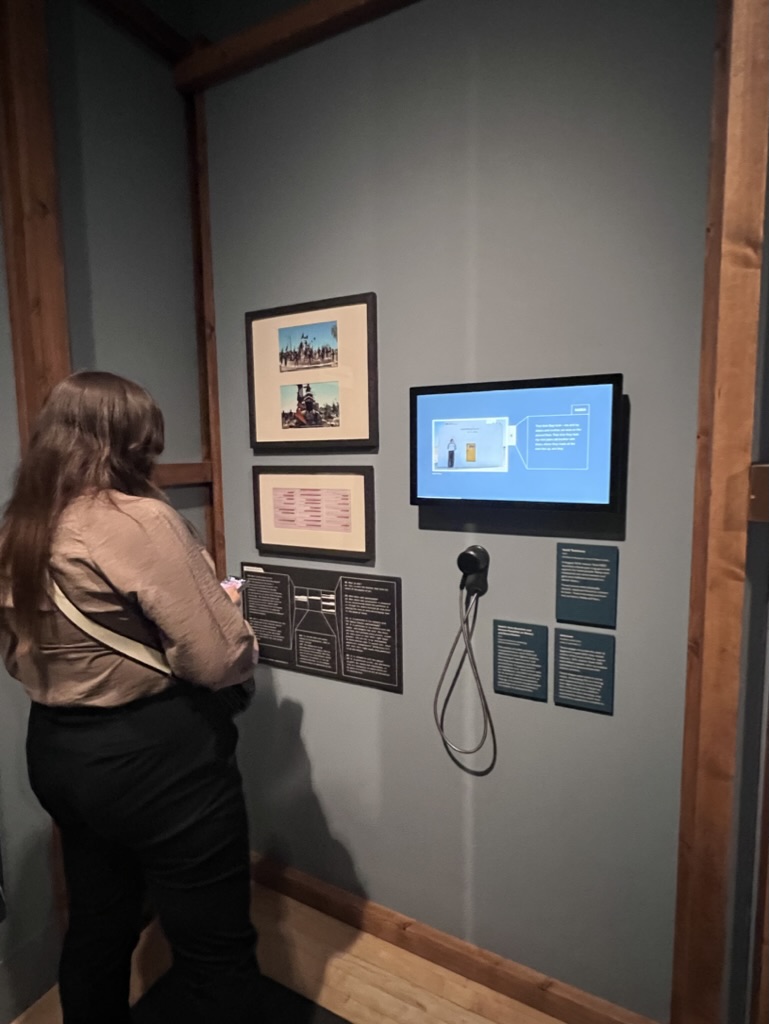
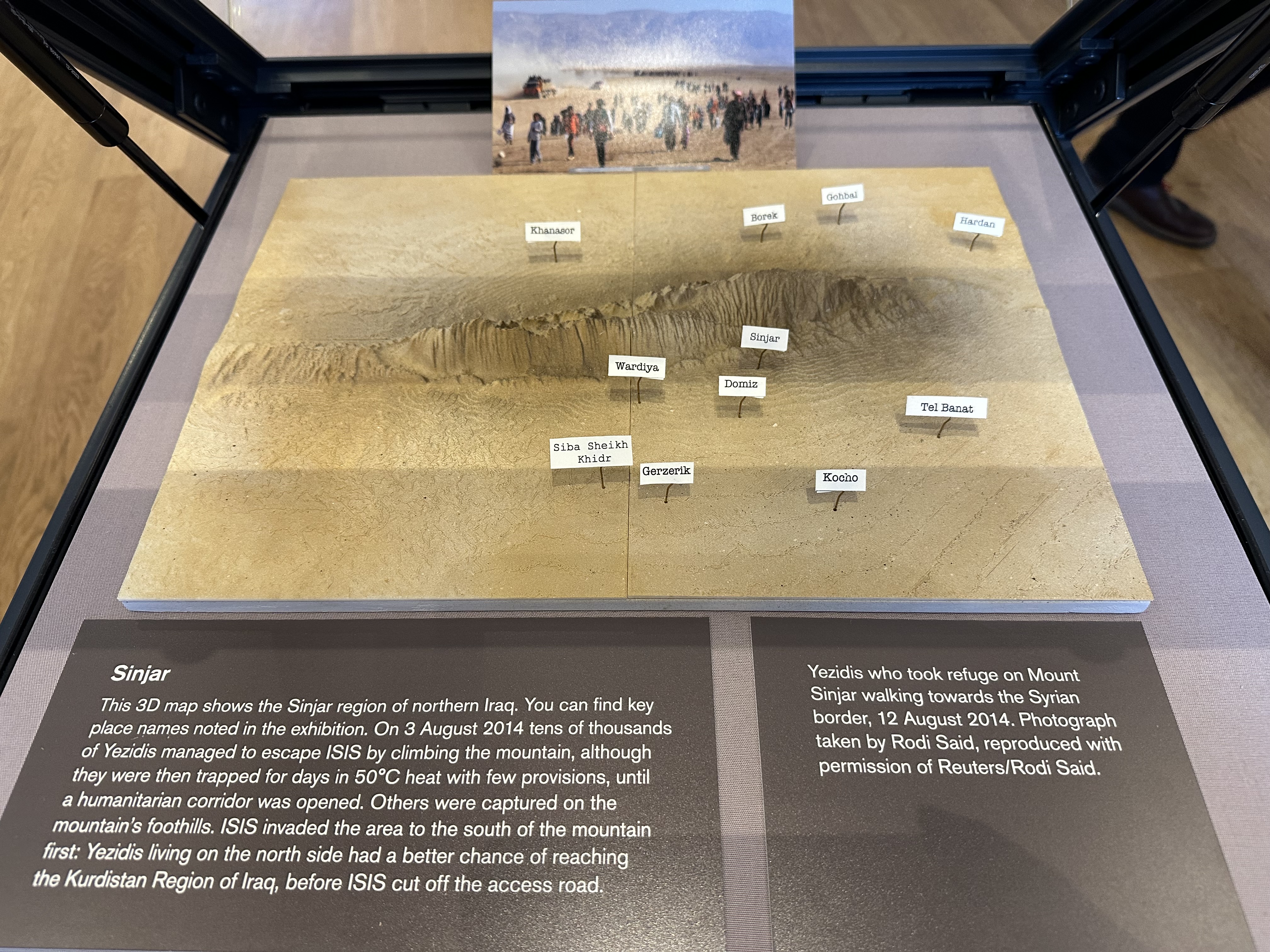
After the positive response, some of the material was used in another exhibition: Unsilenced: Sexual Violence in Conflict at the Imperial War Museum, which drew over 90,000 visitors. Curator Helen Upcraft spoke about working with Rebecca: “My discussions with Rebecca gave me a lot to think about when considering the inclusion of the Yezidi genocide; the challenges and ethics around gathering testimony from those with lived experience, considerations about how to display the testimony and how to build a narrative, using appropriate language, that centres the voices of those with lived experience. Her support meant we could utilise the powerful testimony she collected in an ethical and informed way, that wouldn’t have been possible in the time frame of exhibition development without her.”
Rebecca is now working on collecting her research into a book, which she hopes to publish in the near future.
“It's telling the story chronologically, but 100 years apart, alternating between the events of the Armenian and Yezidi genocides. My hope is that readers kind of hopefully feel that same jolt of recognition that I did, and make those comparisons and connections themselves.”
Rebecca’s work, and the response to it from both the general public and other academics, highlights how much focusing on individual stories can broaden people’s desire to engage with history.
Return to our Research in Focus page to uncover more exciting research happening at Royal Holloway, University of London.
Research in focus